Life Skills Progression Tool Equivilancy Pfce Family Outcomes
I had a asking last week from a reader who wanted to know more than nearly lesson frameworks. I wrote about how useful they are a while back, only merely gave one case. And so, I've dug out my splendid CELTA handbook (from IH Budapest) and summarised most of the frameworks mentioned. I've added a bit of information to explicate some stages a bit more.
Here's the basic structure for…
Receptive skills lessons
Annotation: receptive skills are reading and listening
Lead-in – Generate involvement in the topic / text. There are quite a few ideas for lead-ins here and here
Orientation to text – What do yous need to tell the students nearly the text to fix them for reading/listening? This could be text type, text source, speakers' accents, etc. Whatever is relevant.
Gist task – set a short chore based on general understanding of the text as a whole. For reading texts, the gist task is often timed. Students compare their answers together (pairs/groups) commencement earlier class feedback.
Pre-teach vocabulary – Teach any vocabulary needed for the detailed task
Detailed job – gear up a task based on detailed comprehension (formats might include gap fills, ordering events, truthful/false, etc). Students compare their answers together (pairs/groups) first before class feedback.
Follow-up activeness – do a speaking/writing activity based on the text.
The in a higher place is the BASIC framework. In practice, and with more time than you become during a CELTA lesson, sure tasks might be extended or added. For example, I oftentimes add vocabulary, pronunciation and game stages later the detailed task in my classes. And then, the above focuses primarily on reading and listening skills, in practise other skills/systems are integrated.
Text-based presentations
Lead-in – generate interest in the topic / text
Orientation to text – What do you demand to tell the students about the text to prepare them for reading/listening? This could exist text type, text source, speakers' accents, etc. Any is relevant.
Pre-teach vocabulary – Teach whatever blocking vocabulary (that volition hinder agreement)
Gist job – set a brusque task based on general understanding of the text as a whole. Students compare their answers together (pairs/groups) first before class feedback on content.
Focus on language from the text – clarify and check pregnant, form and pronunciation of target language presented in the text. Guided discovery tasks work well with text-based presentations
Controlled practice of the target linguistic communication (gap fills, sentence completion, multiple choice, etc)
Freer practice of the target language – give the learners a chance to apply the target linguistic communication in a freer context.
Pinnacle tip : a 'freer practice' and a 'follow-up chore' are dissimilar. In a freer practice, you lot want to encourage learners to employ target language. It's part of a systems (linguistic communication) based lesson. A follow-up task is what you utilize later on a skills based lesson to exploit the text further. These tin can be hands confused on the CELTA – exist careful!
Writing lessons
Using a sample text is a proficient style to model output and language for a writing task. I guess this is similar to a text based presentation really. Beneath is the framework for a writing lesson that was suggested on my CELTA:
Atomic number 82-in – generate involvement, set topic
Reading (optional) – provide a model of the text type
Language grooming – vocabulary, expressions, etc. that are introduced through the reading or past the teacher. These include specific features of the text type (eastward.thousand. layout)
Content preparation – students' think of ideas via a mind map, notes, etc.
Writing – the product stage
Feedback to content
Feedback to language – including error correction
In practice my writing lessons most always include providing a model. I often utilize writing every bit a follow-up activeness after reading/listening, only I'm normally interested in the content rather than any language, and rarely provide specific language input in that instance. This is the framework I've referred to the least – I rarely teach lessons with a specific writing focus. Plus, when I do they seem to follow this design quite naturally – they must take taught me well on the course!
Height tip – On the CELTA I was told 'always feedback to content before feedback to language'. This is one of the nigh useful tips I picked up. Students are often very great to share what they've written with others, especially if they've written something funny. Requite them a chance to hash out the content first to show what they've produced is actually important/interesting, rather than simply correcting their errors.
Speaking lessons
The framework for a speaking lesson is the same as the writing lesson above, but the model text is listening rather than reading. The model suggests preparing content first rather than language. I'd say these stages are interchangeable, as they are above too.
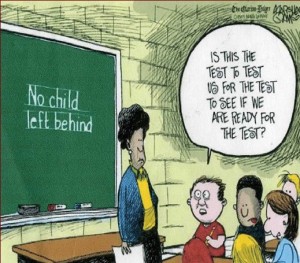
testing times…
Test – Teach – Test
One of my favourite frameworks. I don't know why – maybe as I find it quite like shooting fish in a barrel to programme using it. Too, it'due south a good bit of jargon to bring up in the staffroom when someone asks for help with planning: 'hmmm, I might approach that using test-teach-exam'! I feel like I know what I'm talking about when I say information technology, but I probably come across like a cocky then and so! Seriously though, it'due south good for checking what students already know, and makes it quite easy to check that language input has been understood. I used this a lot when I first started out.
Use this framework for linguistic communication based lessons (specifically grammer and vocabulary)
Lead-in – generate interest in the topic
Test i – Give students a matching, categorising, ordering, gap-fill etc. job to check what they already know. For example, if your target language is 10 vocabulary items, you could get students to lucifer the words with the right definition.
Feedback to test 1 – check what students get correct. Give language input or clarify what they didn't empathize (remember, when introducing new vocabulary always call back MFPA: 'meaning, class pronunciation, appropriacy')
Test ii – Controlled practice of the target linguistic communication. Requite students a risk to put what you just clarified into practice. For example, if y'all did a matching task in 'Test 1', maybe yous could exercise a gap make full in 'Exam 2', where learners choose the advisable word in context.
Freer do – requite students a adventure to employ the language in a freer context. Word questions, roleplay, etc.
Presentation – Practice – Product
I oftentimes hear teachers call this 'the traditional PPP method', which seems to have negative connotations. I'm not sure it's then bad, information technology serves a purpose, just it's considered a deductive approach. Linguistic communication input can always be made more student-centred though.
Basically, yous present the target language, give students plenty of controlled practice, then the production stage is similar a freer practice. It's explained very well by the British Council here so I'll get out it to the experts!
Task-based approaches
Scrivener (2011:32) says that a Task-Based Learning (TBL) approach is a variant of Communicative Language Teaching (CLT) and it focuses on 'the grooming for, doing of, and reflective assay of tasks that reflect real life needs and skills'. We didn't comprehend TBL much on the CELTA – I think the British Council have summarised that pretty well here likewise. Nosotros've been using TBL approaches on our CELTA Young Learner extension course recently, with these main components:
Pre-job – students prepare for completion of the cadre chore. They are given appropriate language input (or choose the language they need themselves), the cadre task is modelled, success criteria is highlighted, etc.
Core chore – students complete the main chore
Mail service chore – extension work based on the main task, which normally involves feedback or employ of main task content, delayed fault correction, etc
On my CELTA, the framework we were given expanded on the above a bit:

people experiencing feedback…
Pre-task
(Core) task
Feedback – similar to post-task
Task – repeat the same job, addressing errors or further input given during feedback
Feedback
Pinnacle tip: On my CELTA, 'upgrading learner language' was a buzzword I remember from the input on TBL. During the feedback stage, y'all might desire to give further input or culling expressions to aggrandize on students existing structures. Also, yous may want to describe attention to practiced language used by learners and encourage others to use it when you repeat the task.
This 'task and so feedback' pattern can repeat again. To be honest, I find it very hard to pin down key features of a task-based lesson myself, beyond the 'pre, cadre, mail service-task' structure. In one case you go into it, there are often far more elements involved in helping the students achieve the main job. Confusingly, many of these are 'not-tasks', which may involve linguistic communication input and will pb to the outcome, only don't accept a clear chatty goal in themselves! Nightmare, huh?! (If that didn't make sense, here's the Wikipedia link to TBL, and a nice summary article from Rod Ellis).
Actually, the difficulties in defining fundamental stages of a TBL lesson highlight an important point when using these frameworks. They are all outlines, and are useful for general reference but they are non rigid. They are really useful when you're starting out, and I honestly do withal refer to them now and once again. Yet, the more confident y'all get with your own teaching exercise, the more than yous will shape these frameworks, extend them, try stuff completely new, etc. In the meantime, I do promise the summary in a higher place has helped to clarify a few things!
Image rights: herinst.org, vapartners.ca
Categories: CELTA tips, Full general
turnerhatilight39.blogspot.com
Source: https://eltplanning.com/2016/04/08/celta-lesson-frameworks/
0 Response to "Life Skills Progression Tool Equivilancy Pfce Family Outcomes"
Post a Comment